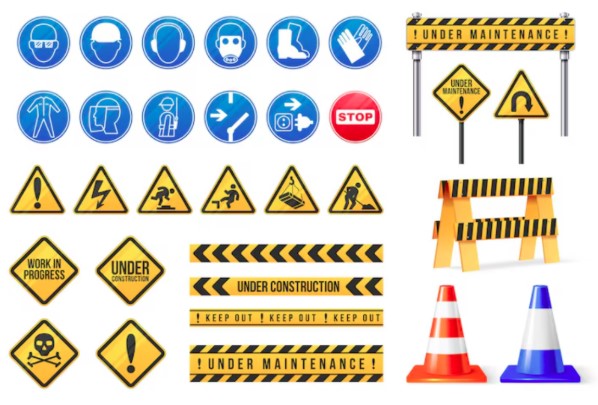

Effective communication is the cornerstone of any successful occupational health and safety program. In environments where hazards are present, such as industrial plants, construction sites, and laboratories, the ability to convey critical information instantly can mean the difference between safety and injury.
Visual markers serve as a universal language of caution, providing immediate guidance to both trained professionals and visitors.
By utilizing standardized colors, symbols, and text, safety signs play a fundamental role in reducing human error and ensuring that everyone in a workspace remains aware of their surroundings and the risks involved.
Providing Immediate Hazard Recognition
The primary function of visual warnings is to alert individuals to dangers that may not be immediately obvious. High voltage areas, slippery surfaces, or the presence of toxic chemicals require instant identification to prevent accidental exposure.
Because the human brain processes images much faster than text, the symbols found on safety signs are designed to trigger an immediate cognitive response.
This rapid recognition is vital in high pressure environments where a worker might be distracted or tired. Having a constant, unblinking reminder of a hazard ensures that vigilance remains high throughout the duration of a shift.
Mandating the Use of Protective Equipment
Many workplace injuries occur because employees forget to wear their designated safety gear, such as helmets, gloves, or ear protection. Strategically placed safety signs serve as mandatory reminders at the point of entry to dangerous zones.
These markers reinforce company policy and safety culture by making the requirements for personal protective equipment clear and unambiguous.
When workers are constantly confronted with visual instructions to wear eye protection or high visibility vests, the act of following safety protocols becomes a subconscious habit, significantly lowering the statistical probability of accidents.
Guiding Emergency Response and Evacuation
During a crisis, such as a fire or a gas leak, panic can often impair logical thinking and memory. In these high stress situations, the presence of clear directional indicators is essential for a safe exit.
Specialized safety signs that mark emergency exits, the location of first aid kits, and the placement of fire extinguishers provide a logical roadmap for escape and response.
These signs are often made with photoluminescent materials to ensure they remain visible even if the power fails. By providing a clear path to safety, these markers prevent the chaos and confusion that often lead to secondary injuries during an evacuation.
Promoting Safe Traffic and Equipment Movement
In warehouses and manufacturing facilities, the movement of forklifts and automated machinery creates a dynamic risk environment. Visual cues are necessary to define pedestrian walkways and vehicle lanes.
By using safety signs to mark intersections and no-go zones, managers can prevent collisions between heavy equipment and personnel. These markers also dictate speed limits and load capacities, ensuring that machinery is operated within safe parameters.
Organizing the movement of people and hardware through clear signage is a key strategy for maintaining a fluid and accident free logistics operation.
Overcoming Language and Literacy Barriers
Modern workforces are increasingly diverse, often consisting of individuals who speak different primary languages. Relying solely on verbal instructions or complex manuals can lead to dangerous misunderstandings.
Standardized safety signs utilize internationally recognized pictograms that transcend linguistic boundaries. Whether a worker speaks English or another language, a symbol of a falling rock or a biohazard is understood universally.
This inclusivity ensures that safety information is accessible to everyone on the site, regardless of their background or literacy level, creating a more equitable and secure work environment.