
A lot of companies assume adding a logo is enough to call something customized. That’s where most corporate gifting efforts fall flat.
If you’re working with Offineeds, Customized Corporate Gifts or exploring customized corporate gifts seriously, the difference becomes obvious very quickly.
Because real customization isn’t about branding—it’s about relevance.
Why Logo Printing Isn’t Enough Anymore
A notebook with a logo or a mug with a company name checks a box. But it rarely creates a connection.
Employees and clients today:
- Already receive multiple branded items
- Can instantly tell when something is mass-produced
- Value usefulness and personal touch over visibility
That’s why many logo-heavy gifts end up unused or forgotten.
What “Truly Customized” Actually Means
A corporate gift feels genuinely customized when it reflects who the recipient is, not just who the sender is.
Here’s what defines that difference:
1. Context-Based Selection
Instead of choosing one gift for everyone, companies now consider:
- Role (developer vs. sales vs. leadership)
- Work setup (remote vs. office)
- City or climate
A tech team receiving ergonomic accessories makes more sense than generic desk items.
2. Personalization Beyond Branding
Real customization includes:
- Individual names instead of just logos
- Personalized notes or onboarding messages
- Kits curated for specific use cases
When someone sees their name or a thoughtful message, the perception shifts instantly.
3. Utility-First Approach
As discussed above, relevance plays a big role. Practical gifts win because they integrate into daily routines.
Examples:
- Work-from-home kits
- Tech accessories
- Daily-use stationery
If the item gets used regularly, the brand recall happens naturally.
4. Experience Over Object
Sometimes the packaging and presentation matter more than the product itself.
A well-designed unboxing experience:
- Builds anticipation
- Feels premium
- Creates a memorable first impression
This is why onboarding kits and festive hampers are now designed like experiences, not just shipments.
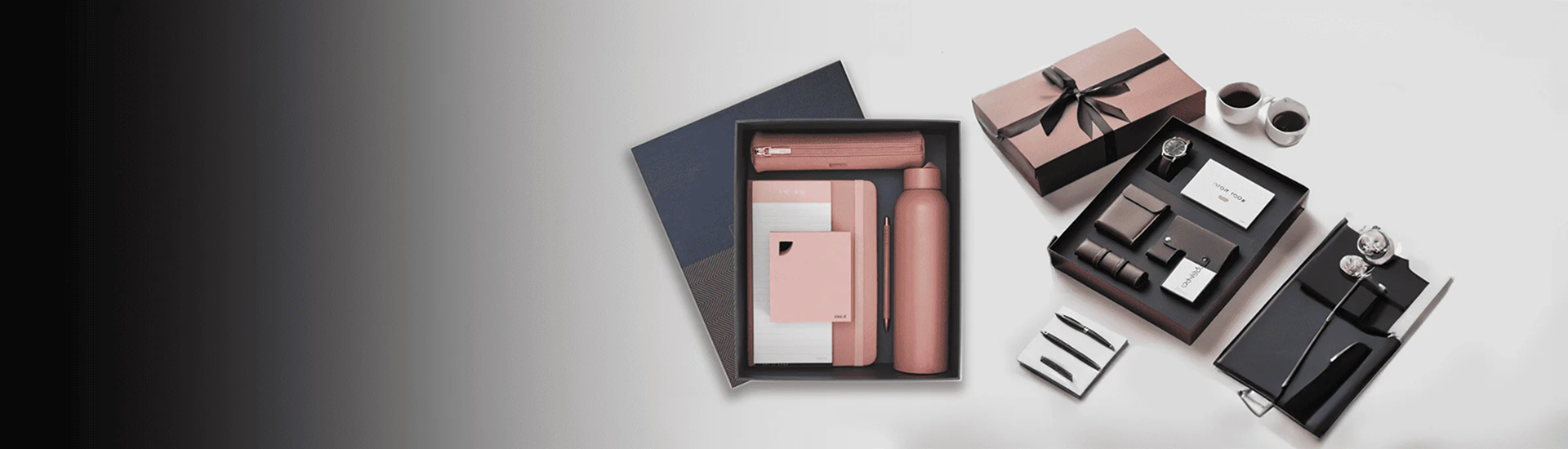
5. Thoughtful Packaging and Design
A plain box with a logo feels transactional.
A curated package with:
- Color themes
- Branded inserts
- Organized compartments
…feels intentional and premium, even if the items inside are simple.
The Role of Customization in Employee Perception
When we talked about utility and personalization earlier, both directly impact how employees interpret the gift.
A generic item signals:
- “This was bulk ordered”
- “Everyone got the same thing”
A customized gift signals:
- “This was planned”
- “This was meant for me”
That shift influences:
- Engagement
- Loyalty
- First impressions (especially for new hires)
Common Mistakes That Make Gifts Feel Generic
Even companies trying to customize often miss the mark. Here’s where things go wrong:
- Over-branding every item in the kit
- Ignoring recipient preferences
- Choosing aesthetics over usability
- Using the same gift across departments
- Skipping personalization to save time
These shortcuts reduce impact, even if the budget is high.
How Indian Companies Are Getting This Right
Many growing teams are now:
- Segmenting employees before gifting
- Offering multiple gift options to choose from
- Creating role-based or occasion-based kits
- Partnering with vendors who handle customization at scale
This approach balances personalization with operational efficiency.
Final Thought
Customization isn’t about adding more branding—it’s about adding more meaning.
The moment a gift feels like it was chosen with intent, it stops being just another corporate item and starts becoming something people actually value.
And that’s the difference most companies are now trying to get right.