
Today, a stroll through Boston’s business area reveals a noticeable change. It’s not just the new construction or updated storefronts. The air itself feels different inside these buildings. Cleaner somehow. Local businesses have implemented rigorous hygiene measures that would have seemed impossible not long ago. Except now they just make sense.
Breathing Better Indoors
That stuffy office smell? Pretty much extinct in Boston workplaces. Companies removed old ventilation systems and replaced them with equipment that purifies air instead of just circulating it. These machines capture incredibly small particles, invisible to the naked eye.
UV lights cook germs inside air ducts now. It sounds like science fiction. However, it is merely a typical Tuesday in Boston workplaces. When rooms become too full, sensors activate to supply fresh air. This prevents drowsiness. Plenty of older buildings around town couldn’t install fancy systems. So they got creative. Portable purifiers hum in corners. Windows that had not opened since the Big Dig finally got repaired. Even the tiny law offices squeezed into ancient Beacon Hill brownstones found ways to keep air moving.
Hands-Free Everything
The elevator button everyone pressed? Ancient history. Now you wave at a sensor or talk to your phone. Coffee machines recognize employees by their phones and remember their usual order. Nobody fights over the thermostat because voice commands handle temperature changes.
Bathroom doors swing both ways on special hinges; no handles needed. Just push with your shoulder or hip and keep moving. Faucets, soap, towels, all automatic. The only thing you touch in there is your own clothes.
Shared desks get blasted with UV light between shifts. Keyboards at reception desks hide under antimicrobial covers that are swapped daily.
Constant Cleaning Routines
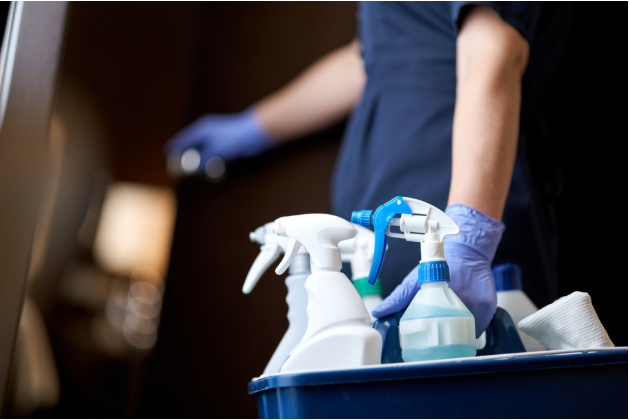
Remember when offices got cleaned after everyone left? That schedule died completely. Now someone is always wiping, spraying, or sanitizing something. Morning crew hits the entrance areas. Lunch crew tackles kitchens and bathrooms. Afternoon crew handles meeting rooms between bookings.
Boston businesses figured out that commercial cleaning services make more financial sense than training their own people. All Pro Cleaning Systems brings serious equipment, such as those electrostatic sprayers that wrap disinfectants around every surface, even the undersides nobody sees. They know which products kill what, how long to let chemicals sit, and where germs love to party.
Workers Taking Charge
Here’s what really changed: employees stopped pretending they were too busy to wipe their desks. Companies hand out cleaning supplies as if they were office supplies, because they are. Your stapler sits next to your sanitizer. Your sticky notes share space with disinfectant wipes. Showing up sick went from tough to stupid. That person coughing through the quarterly meeting? They are sent home now. Not fired, not punished. Just told to rest up and come back healthy. Remote work serves as a viable solution for employees experiencing minor ailments, but who retain their productivity.
Office designs shifted toward materials that actually get clean. Those fuzzy cubicle walls collected everything but compliments. The features now include smooth surfaces and sealed edges. Not to mention furniture resistant to spills. There are also actual plants all over the place. These consume carbon dioxide and release oxygen. Boston offices look more like gardens than cubicle farms these days.
Conclusion
Five years ago, Boston businesses treated hygiene like a maintenance issue. Today it’s part of their identity. The constant cleaning, touchless tech, and fresh air aren’t going anywhere. Why would they? Employees miss fewer days. Customers feel comfortable visiting. The workplace finally stopped being that place where everyone catches whatever’s going around. Boston proved that healthier offices aren’t just possible; they’re profitable.